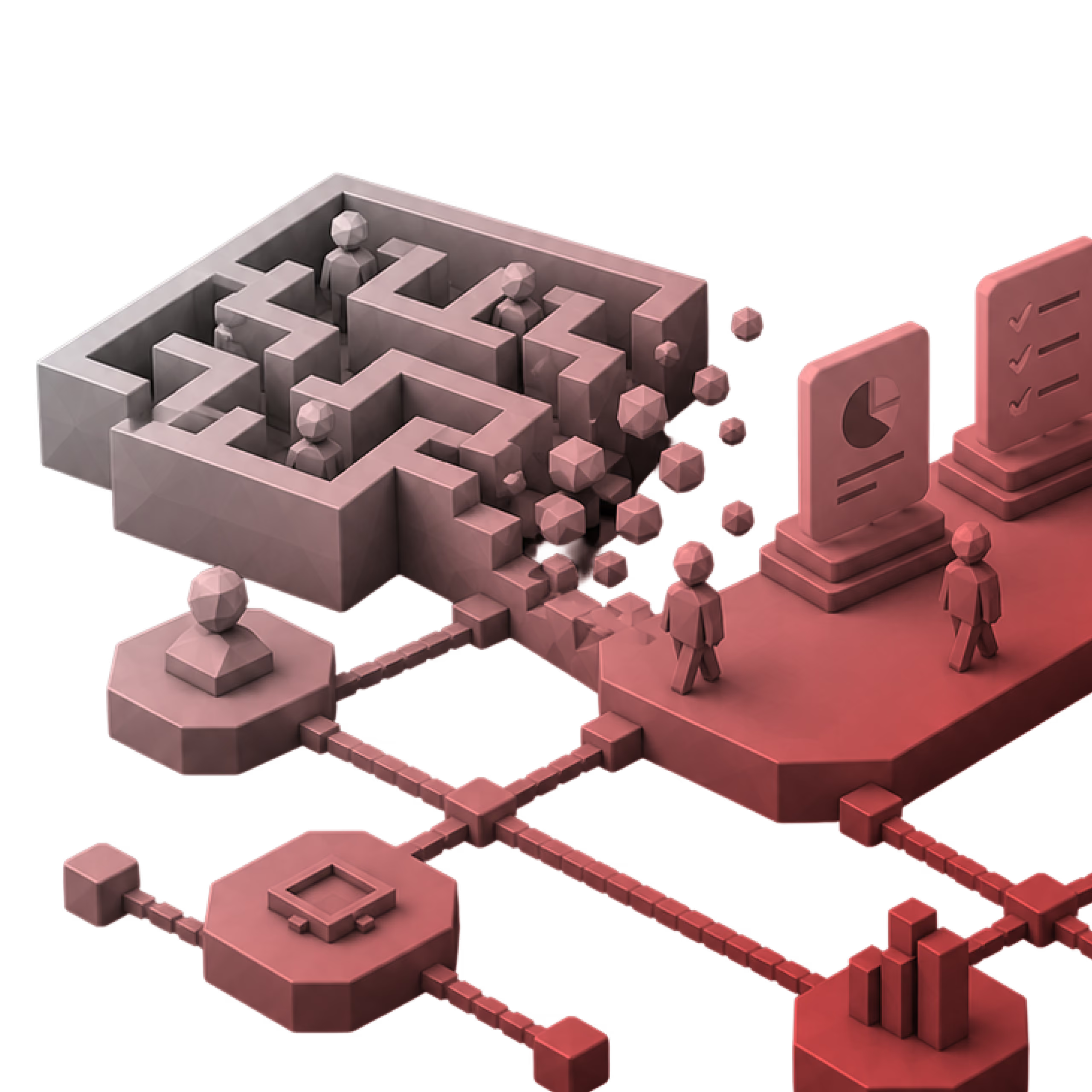
More than a billion people live with some form of disability, and many more have temporary or situational limitations — a broken arm, bright sunlight, a slow connection, ageing eyesight. Digital accessibility means websites and apps work for all of them: people who use screen readers, keyboard navigation, voice control, magnification, captions, or simply need clear language and enough contrast.
Accessibility is also a legal and commercial requirement. Standards such as WCAG are referenced by laws and regulations in many markets, and organisations face complaints, lawsuits, and lost procurement deals when products fall short. Yet most teams treat accessibility as a final checklist, fixing issues after launch at much higher cost.
Digital accessibility consulting firms help in two ways. Specialist auditors test products against standards, document issues, and support legal compliance. Product design partners build accessibility into research, design systems, and components from the start, so fewer issues reach the audit at all. Most organisations need both. This list covers the leading firms on each side.
Do you need an audit, a redesign, or both? Auditors find and document issues against WCAG. Design partners fix root causes in components and journeys. Be clear which you need first.
Do they test with disabled users? Automated tools catch only part of the problem. Ask how they include people who use assistive technology.
Can they support legal and procurement needs? Ask about conformance reports, VPATs, and remediation tracking.
Will they fix the design system? Ask how they make components, colours, and patterns accessible by default so issues do not return.
Will your team learn? Ask about training for designers, developers, and content writers.
NetBramha designs accessibility into products from the start. For NPCI's BHIM, the goal was an inclusive digital payments companion that drives accessibility and trust: key actions above the fold, high-contrast semantic colours, an illustration system that supports inclusive experiences, and a consistent, accessible visual language across a design system now used by more than 128 million people. For HDFC Bank, persona-led flows for India's multigenerational audience reduced cognitive load, and card interfaces were designed for usability and accessibility.
For Oxford University Press, NetBramha delivered a modern, accessible learning platform with layouts and illustrations that made it approachable for younger learners. For SIXT, high-contrast typography and clear hierarchy improved scannability and accessibility across the global rental journey.
Accessibility must be built in, not bolted on — BHIM's design system carries an accessible visual language.
Your audience is diverse — HDFC and BHIM serve multigenerational, mass-market users.
A redesign is planned — accessibility is cheapest to fix during design.
Formal WCAG conformance audits — for certified audits, VPATs, or legal support, pair with a specialist auditor or confirm scope.
Assistive technology testing — confirm how screen reader and keyboard testing is included.
Deque, founded in 1999, is known for accessibility testing tools used by development teams, alongside audits and training.
Developers need to test as they build — their tools fit into development workflows.
The programme is enterprise-wide — they support large organisations.
Training is needed — they offer courses for teams.
Design support — confirm help with redesigning journeys, not just finding issues.
Tool licensing — confirm what is included in services versus software.
Level Access was founded in 1999 by engineers with disabilities and offers an accessibility platform, audits, and compliance services, with offices in the US, Canada, and the UK.
Compliance is the priority — they focus on audits and legal readiness.
Many products need monitoring — their platform supports scale.
Lived experience matters — their founders built the company from it.
Design support — confirm help with redesign and design systems.
Platform cost — confirm licensing and service scope.
TPGi provides accessibility consulting, audits, and testing as part of Vispero, a company that also makes assistive technology.
Expert audits are needed — they specialise in accessibility evaluation.
Assistive technology matters — their parent company builds it.
Remediation guidance is needed — they advise on fixes.
Design execution — confirm who redesigns the product.
Timelines — confirm audit capacity for your release dates.
Knowbility is an Austin-based non-profit founded in 1999 that offers accessibility training, testing, and advocacy.
Your team needs training — education is central to their mission.
User testing matters — they connect teams with people with disabilities.
Mission alignment matters — they are a non-profit.
Scale — confirm capacity for large programmes.
Design execution — confirm who designs the fixes.
Nielsen Norman Group is known for usability research and training, including research on how people with disabilities use digital products.
Research-backed guidance matters — they publish widely used findings.
Usability and accessibility overlap — they cover both.
Your team wants training — they run well-known UX courses.
Formal audits — confirm WCAG audit services.
Design execution — they advise; confirm who designs fixes.
Should I hire an accessibility auditor or a design agency?
Auditors are best for compliance evidence and documenting issues. Design agencies are best for fixing root causes in journeys and design systems. Most organisations get the best results using both.
How long does it take to make a product accessible?
Audits take 2–6 weeks. Fixing issues and updating the design system typically takes 2–6 months, followed by ongoing monitoring with each release.
UX practice and digital product expectations differ by region — what signals quality and trust to a buyer in the US or UK is different from Dubai or Singapore. An agency with direct market experience brings depth that cross-industry portfolios cannot substitute.
Usability Testing at NetBramha →