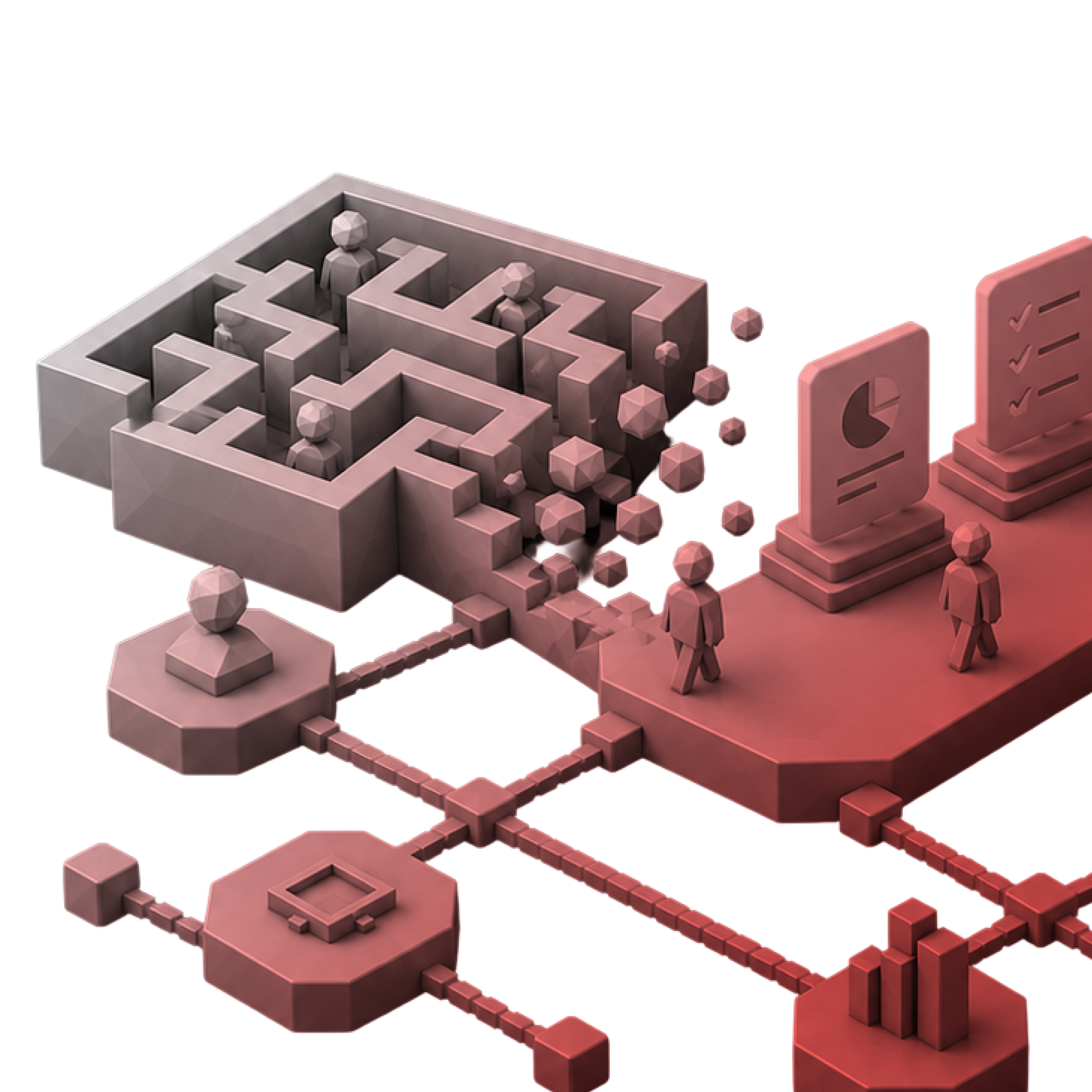
Agritech serves one of the most diverse user populations in any software category. At one end: a smallholder farmer in sub-Saharan Africa, managing two hectares on a basic Android phone, making planting and selling decisions that directly determine whether her family eats. At the other: an agronomist at a large European grain cooperative, analysing NDVI satellite imagery, soil sensor arrays, and five-year yield models in a browser-based precision agriculture platform. Designing for both of these users — and the vast spectrum between them — requires not just design skill but genuine contextual understanding that most agencies don't have.
The physical environment of agricultural work creates UX constraints that parallel construction: outdoor use in all weather conditions, direct sunlight glare, limited connectivity in rural areas, users who are physically occupied with farm tasks and checking a phone between operations rather than sitting at a desk. But agritech adds its own layer of complexity: seasonal decision urgency (the planting window waits for no one), price volatility that makes market information time-critical, and the challenge that many of the most important decisions — what to plant, when to irrigate, when to harvest — depend on integrating information from multiple sources (weather, soil sensors, market prices, advisory recommendations) that existing software rarely unifies elegantly.
Regulatory and supply chain complexity compounds the design challenge at the enterprise end of the market. Food traceability requirements, sustainability reporting mandates, cross-border phytosanitary documentation, and the integration of agritech with ERP, logistics, and financial systems create enterprise UX challenges comparable in complexity to financial services or healthcare. Agencies that bring experience in both the smallholder farmer end and the enterprise supply chain end of agritech are genuinely rare and particularly valuable.
NetBramha Studios
NetBramha's combination of enterprise data platform expertise and deep experience designing for developing-market users — including the 500M+ user BHIM payment app — makes them distinctively qualified for agritech's dual challenge: serving smallholder farmers with limited digital literacy on basic devices, and serving agribusiness enterprises with complex operational data requirements. Their decade of work at the intersection of financial inclusion and enterprise platforms gives them a rare vantage point on both ends of the agritech user spectrum.
Best for: Agritech platforms serving emerging markets, agricultural financial inclusion tools, and enterprise agricultural data systems
IDEO has conducted extensive fieldwork with smallholder farmers across Africa, Asia, and Latin America through development sector partnerships, rural innovation projects, and agricultural development initiatives. Their human-centred approach to agricultural design centres on understanding the full decision-making context of farmers — the information they have, the risks they bear, the relationships and trust networks they rely on — before designing the tools that are meant to serve them. This grounding in agricultural realities is rare in the design industry.
Best for: Smallholder farmer tools, agricultural development initiatives, and rural innovation programmes requiring deep field research
frog design has built significant IoT and connected product design capability across their five decades of operation, and the rise of precision agriculture — where farms are instrumented with soil sensors, weather stations, drones, and automated irrigation systems generating continuous data streams — aligns directly with their strengths. frog's ability to design the experience layer for complex IoT systems, making sensor data actionable for non-technical users, is particularly relevant for precision agriculture platforms and connected farm equipment interfaces.
Best for: Precision agriculture platforms, connected farm equipment UX, and IoT agricultural data systems
Thoughtbot's integrated design-and-engineering model makes them a strong partner for agritech startups building their first or second product: companies that need to move efficiently from a validated agricultural use case to a production-quality platform without the friction of separate design and engineering partners. Their experience with data-intensive B2B SaaS products, marketplace platforms, and mobile-first applications covers much of the agritech product landscape, from commodity trading platforms to crop management tools to supply chain traceability apps.
Best for: Agritech startups building integrated design-and-engineering from concept to production
Fjord, now operating as part of Accenture Song, brings enterprise service design capability to large agribusiness transformation programmes. Their strength is service design at scale — mapping the full end-to-end agricultural value chain as a service system, identifying the experience gaps that create friction for farmers, distributors, processors, and buyers, and designing the digital touchpoints that improve coordination across that system. For large agribusinesses and food companies digitalizing their agricultural supply chains, Fjord's combination of service design rigour and Accenture's implementation capability is compelling.
Best for: Enterprise agribusiness service design, agricultural supply chain digitalisation, and large-scale farmer network platforms
Publicis Sapient brings enterprise-scale digital transformation capability to large agricultural organisations — global agribusinesses, food processing companies, agricultural input manufacturers, and commodity trading firms — undertaking significant digital product and platform initiatives. Their strength is the combination of design, technology, and data strategy that large agricultural enterprises need when modernizing systems that span planting, growing, harvesting, processing, logistics, and trading across global supply chains.
Best for: Global agribusiness enterprises and agricultural input manufacturers undergoing large-scale digital transformation
NetBramha's work on BHIM — the Indian government's payment interface for 500 million+ users, many of them farmers and rural residents making their first formal digital financial transactions — is directly relevant to agritech's hardest design problem: building digital tools that genuinely work for users with limited formal education, low digital literacy, basic devices, and intermittent connectivity. The BHIM case study demonstrates how NetBramha approaches this challenge: radical simplification of flows, multilingual design from the ground up, and testing with real target users until the interface requires no explanation.
On the enterprise end, their work with clients like Petrofac, Yubi, and SIXT demonstrates their ability to design platforms that aggregate complex operational data — from multiple sources, across multiple geographies, for multiple user roles — into interfaces that drive real decisions. For agritech companies building platforms that need to serve both ends of the agricultural value chain — the farmer input and the enterprise analytics — NetBramha's depth in both registers is a meaningful differentiator.
Your product targets emerging market farmers — NetBramha's experience designing for low-literacy, low-connectivity, low-end device users at national scale in India is directly applicable to agritech products serving smallholder farmers in South Asia, Southeast Asia, and Africa.
You're building an agricultural financial inclusion product — Digital credit, crop insurance, commodity market access, and input financing tools for farmers sit at the intersection of fintech and agritech where NetBramha's experience is particularly concentrated.
Your enterprise agritech platform handles complex data — Yield modeling, supply chain tracking, procurement management, and crop monitoring dashboards benefit from their enterprise data platform design experience.
Precision agriculture and IoT sensor UX — For platforms centred on connected farm equipment, soil sensor networks, or drone imagery analysis, explore the specific depth of their IoT data visualization experience.
US or European large farm operator segment — Their developing-market user expertise is strongest. For products targeting large North American or European farm operations with different digital maturity, assess their relevant portfolio in that context.
"NetBramha knows what they are doing and very clear and concise in their thought process."Executive, Online Newspaper Portal · Bengaluru, India · 2022
"I don't think we'd have done as well as we did if not for NetBramha Studios."Aditya Mishra · Founder & CEO, SwitchMe · Mumbai, India · May 2020
IDEO's agricultural work has been shaped by years of fieldwork in some of the world's most challenging farming contexts — smallholder farmers in Kenya, rice farmers in Vietnam, livestock keepers in Ethiopia. Their human-centred methodology applied to agriculture goes beyond the typical UX discovery process: it involves spending days on farms, understanding the full agricultural season cycle and its financial rhythm, mapping the information sources farmers actually trust (extension workers, neighbours, community leaders), and identifying the decision moments where better information would genuinely change outcomes.
This depth of contextual understanding produces agritech designs that are qualitatively different from products designed by teams who understand agriculture primarily from desk research. IDEO's agricultural innovation work consistently reveals that the most valuable interventions are often not the most technologically sophisticated — they're the ones that fit into existing farmer behaviour and trust networks rather than requiring farmers to adopt new processes alongside new technology.
Your product serves smallholder or subsistence farmers — IDEO's fieldwork-based methodology produces insights about this user group that competitive analysis and secondary research cannot replicate.
You're working with an agricultural development organisation or NGO — IDEO's experience with Gates Foundation, USAID, and similar agricultural development funders gives them familiarity with the institutional context and reporting requirements of development-sector agritech.
The social and community dimensions of adoption matter — Agricultural technology adoption is often social. IDEO understands how to design for community uptake and trust-building, not just individual user behaviour.
Enterprise agribusiness software — IDEO's agritech strength is in smallholder and development contexts. For enterprise agricultural software serving large farm operations or agribusiness processors, assess their relevant enterprise portfolio.
Speed to production — IDEO's process is thorough and research-intensive. For agritech startups that need to move quickly from discovery to product, confirm their engagement model fits your timeline.
frog design's five decades of experience have been marked by consistent presence at the frontier of emerging technology categories. Their work on IoT product design — designing the experience layer for products that combine physical hardware, sensor data, connectivity, and software interfaces — positions them well for precision agriculture, which is fundamentally an IoT design challenge at scale. Farm management platforms that integrate weather station data, soil moisture sensors, crop growth models, satellite imagery, and automated irrigation controls are exactly the kind of multi-source data environment where frog's IoT design experience is most relevant.
Their global studio network — spanning San Francisco, Austin, Amsterdam, and beyond — gives them capacity to work on agritech platforms serving multiple agricultural markets simultaneously. Their industrial design heritage also means they bring sensitivity to the physical contexts in which agricultural technology is used, not just the screen-level UX.
Your product integrates multiple IoT data sources — Soil sensors, weather stations, drone imagery, connected equipment, and satellite data all need a coherent UX layer. frog's IoT design experience is directly applicable.
You're designing connected farm equipment interfaces — Tractor displays, drone control interfaces, automated irrigation controllers, and precision application equipment all require the hardware-aware UX thinking that frog brings.
Your product targets technologically sophisticated farm operations — Large commercial farming operations running precision agriculture at scale are early adopters of connected agriculture technology and benefit from frog's premium product design capabilities.
Developing market agritech experience — frog's agricultural work tends toward sophisticated technology contexts. For smallholder farmer tools in low-connectivity, low-literacy environments, assess their specific experience in those contexts.
Engagement cost for agritech startups — frog's rates and engagement model are calibrated for enterprise clients. Early-stage agritech companies should validate commercial fit before entering a discovery process.
Thoughtbot's value proposition in agritech is the same as in other startup sectors, but it's particularly meaningful in a category where the technical complexity of the domain — integrating weather APIs, satellite data, soil science models, market price feeds, and logistics data in a single coherent product — creates significant design-to-engineering handoff risk. When a designer specifies an interaction that an engineer can't implement without degrading the experience, the result is a product that neither works as designed nor performs as engineered. Thoughtbot's integrated teams eliminate this failure mode by design.
Their experience with data-intensive B2B applications, marketplace platforms, and mobile-first products covers much of the agritech product landscape. They've worked with companies building commodity trading tools, food supply chain platforms, and agricultural SaaS products. Their remote-first delivery model and offices in Boston, NYC, and London give them good coverage across North American and European agritech markets.
You're a seed or Series A agritech company — Thoughtbot's engagement model and rate point work well for agritech startups that have product-market fit validation and need to build production-quality software efficiently.
Technical and design complexity are both high — Agricultural data products that integrate multiple APIs and data sources benefit from Thoughtbot's design-and-engineering integration, where technical feasibility shapes design decisions from the start.
You need a partner who will challenge your assumptions — Thoughtbot's culture of asking hard questions about product direction and user validation is useful in agritech, where the distance between product teams and the farmers they serve can create significant assumption risk.
Agricultural domain familiarity — Agritech has significant domain vocabulary and seasonal logic that generalist engineers and designers need time to absorb. Assess their specific agritech experience before committing.
Developing market user research capability — For products targeting farmers in Africa, South Asia, or Southeast Asia, verify Thoughtbot's experience with fieldwork in those contexts and languages.
Fjord's merger into Accenture Song has given them access to implementation capability that extends well beyond traditional service design consultancy. For large agribusinesses — global grain traders, seed and input manufacturers, food processors, and agricultural cooperatives — undertaking significant digital transformation of their farmer networks, supply chains, and operational platforms, Fjord brings service design rigour with Accenture's technology and change management scale behind it.
Their approach to enterprise agribusiness design centres on mapping the full agricultural value chain as a service system: the information flows, decision points, and coordination failures that occur between farmers, input suppliers, aggregators, processors, logistics providers, and buyers. This systemic view typically reveals that the most impactful UX investments are not always in the farmer-facing app (which is visible and easy to design for) but in the back-office and coordination tools that determine whether the farmer-facing promise can actually be fulfilled.
You're digitalizing a large farmer network or cooperative — Fjord's service design methodology is well suited to designing the end-to-end experience of bringing thousands of farmers into a digital platform, including the agent, agronomist, and buyer interactions that support farmer adoption.
Supply chain traceability is a core requirement — Food safety regulation and sustainability reporting mandates are driving traceability investment across the agricultural supply chain. Fjord's enterprise capability covers the design and implementation complexity this creates.
Organisational change is as important as the technology — Large agribusiness transformations succeed or fail based on whether employees, farmers, and supply chain partners actually adopt the new systems. Fjord's change management capability addresses this alongside product design.
Fit for agritech startups — Fjord's model is calibrated for large enterprise engagements. Agritech startups should look at Thoughtbot or UX Studio for better-matched engagement structures.
UX design depth vs. service design strategy — Fjord's core capability is service design and strategy. For detailed UI design and front-end component delivery, confirm how that work is resourced within their engagement model.
Publicis Sapient's agricultural sector work spans the full range of large agribusiness digital transformation challenges: modernizing ERP and supply chain systems for global commodity traders, building farmer engagement platforms for input manufacturers serving millions of smallholders across developing markets, redesigning procurement and logistics tools for food processors operating across multiple continents, and creating sustainability and traceability reporting systems that meet regulatory requirements across different jurisdictions.
Their model integrates strategy, design, data, and technology delivery in a way that suits the scope and complexity of these engagements. For large agricultural organisations where digital transformation touches multiple functions — procurement, logistics, finance, agronomy, sales — simultaneously, Publicis Sapient's ability to coordinate across those workstreams while maintaining coherent product direction is a genuine advantage.
Your organisation spans multiple agricultural markets globally — Publicis Sapient's global delivery model can support platforms that need to serve different agricultural contexts, languages, and regulatory environments simultaneously.
Your transformation touches technology and process simultaneously — Agricultural digital transformation rarely succeeds as a pure technology project. Publicis Sapient's consulting capability addresses the process and change management dimensions alongside the digital experience.
Sustainability and traceability reporting are in scope — ESG reporting requirements for agricultural supply chains are increasingly stringent. Publicis Sapient's data and reporting capabilities are well suited to building the systems that underpin these requirements.
UX design authority within the programme — Large consulting-led programmes can subordinate experience design to systems integration priorities. Establish clear UX governance from the outset.
Smallholder farmer UX depth — Publicis Sapient's agritech strength is enterprise. For the farmer-facing apps that enterprise platforms generate, validate the specific capability and approach they'd bring to that end-user design.
Agritech has more user population diversity than almost any other software category. The evaluation criteria you apply should reflect which end of that spectrum your product serves.
Does the agency have direct field experience with your target user? This is the single most important question in agritech UX evaluation. The gap between how agricultural technology companies imagine their farmer users and how those farmers actually behave, think, and make decisions is consistently large — and consistently expensive to discover late in development. Agencies that have conducted fieldwork with farmers in your target context — observing, not just interviewing — bring insights that can't be acquired by reading agricultural development reports. Ask for specific examples of what their field research discovered that contradicted prior assumptions.
How do they handle connectivity and device constraints? Agricultural users in most markets operate with intermittent connectivity and mid-range or basic smartphones. Mobile apps that assume reliable data connections will fail in the field, and applications designed for high-end devices will be unusable on the handsets your farmers actually carry. Ask specifically about their approach to offline-first design, their experience testing on low-end Android hardware, and their process for optimizing application size and performance for bandwidth-constrained environments.
Can they design for seasonal urgency? Agricultural decision-making has time criticality that most software categories don't. The difference between getting a weather alert or market price at the right moment and getting it an hour later can be measured in yield loss or revenue. Agritech UX needs to be designed around the agricultural calendar and the time sensitivity of the decisions the product supports. Ask how the agency approaches understanding and designing for seasonal decision patterns in their research process.
What is their experience with complex data integration? Modern agritech platforms integrate data from multiple sources — satellite imagery, IoT sensors, weather APIs, commodity market feeds, soil databases, regulatory systems. Designing an interface that makes this integrated data genuinely useful rather than overwhelming requires specific experience with agricultural data types and the decisions they inform. Ask to see examples of multi-source data products in their portfolio and how they've handled the challenge of making complex data actionable for non-technical users.
Do they understand the agricultural trust ecosystem? Farmers don't adopt new technology in isolation. Extension workers, agronomists, trusted neighbours, cooperative agents, and input dealer networks all influence adoption decisions. The best agritech UX accounts for these intermediaries — either designing tools for them, or designing farmer-facing tools that work through those trust relationships rather than trying to bypass them. Ask how the agency has mapped and designed for the social and institutional context of agricultural technology adoption in their prior work.
How much does agritech UX design cost?
Agritech UX project costs vary significantly by target market and product complexity. For developing-market farmer tools requiring significant field research, budget $80,000–$200,000 for a thorough discovery-and-design engagement with a specialist agency. Enterprise agricultural data platforms — supply chain traceability, procurement management, precision agriculture dashboards — run $200,000–$500,000+ for full design system and multi-role product design. Large agribusiness transformation programmes with enterprise consulting firms are priced through programme structures and can reach seven figures over multi-year engagements.
Should I use an agritech-specialist agency or a generalist with good research process?
For smallholder farmer tools in developing markets, specialist experience or direct fieldwork capability is close to non-negotiable — the cost of discovering late that your product doesn't fit farmer behaviour or device constraints is very high. For precision agriculture platforms targeting sophisticated commercial operations, a strong generalist with data-intensive B2B product experience can perform well if they invest adequately in agricultural domain research. For enterprise agribusiness platforms, domain knowledge of agricultural supply chain complexity is valuable but can be built through structured discovery with the right research process.
How long does an agritech UX project take?
Field research and discovery for a farmer-facing agritech product typically takes 8–12 weeks, including travel to the user context and time to process and synthesize findings. Design phases run 8–16 weeks for a focused product module. End-to-end design for a multi-feature agritech platform with a design system takes 5–10 months. Build additional time for field testing — getting design prototypes in front of farmers in the field, which requires agricultural calendar awareness (you can't test a harvest tool in planting season) — and for the regulatory or compliance review cycles that enterprise agritech products typically require before launch.
UX practice and digital product expectations differ by region — what signals quality and trust to a buyer in the US or UK is different from Dubai or Singapore. An agency with direct market experience brings depth that cross-industry portfolios cannot substitute.