.avif)
Google is a global technology leader focused on AI, search, and digital innovation across products and platforms.
In this initiative, Google partnered to create an AI-powered, gamified cricket experience that blended real-time motion tracking with immersive, stadium-like digital engagement.
Our mission was to design an interactive AI experience that enables users to replicate professional cricket shots and receive instant performance feedback in an immersive environment.
translating real-time shot analysis into clear visual performance scoring.
guiding users from structured practice to final shot evaluation.
presenting dynamic accuracy metrics in an engaging interface.
enabling QR-based downloads to revisit performance anytime.
Side-by-side professional vs. user playback reinforced visual learning.
Accuracy percentage displayed instantly after each attempt.
.avif)
Countdowns, prompts, and progression cues create structured engagement.
.avif)
Users could scan a QR code to download their final shot performance.
.avif)
Side-by-side professional vs. user playback reinforced visual learning.
Side-by-side professional vs. user playback reinforced visual learning.
Accuracy percentage displayed instantly after each attempt.
Accuracy percentage displayed instantly after each attempt.
Countdowns, prompts, and progression cues create structured engagement.
Countdowns, prompts, and progression cues create structured engagement.
Users could scan a QR code to download their final shot performance.
Users could scan a QR code to download their final shot performance.
For Google, we designed an engaging, performance-driven sports experience powered by AI-based motion recognition.
is driven by AI
is sustained through gamification
is extended via sharing
.avif)
Dynamic scoring screens display immediate accuracy percentages, reinforcing performance through bold visual feedback.
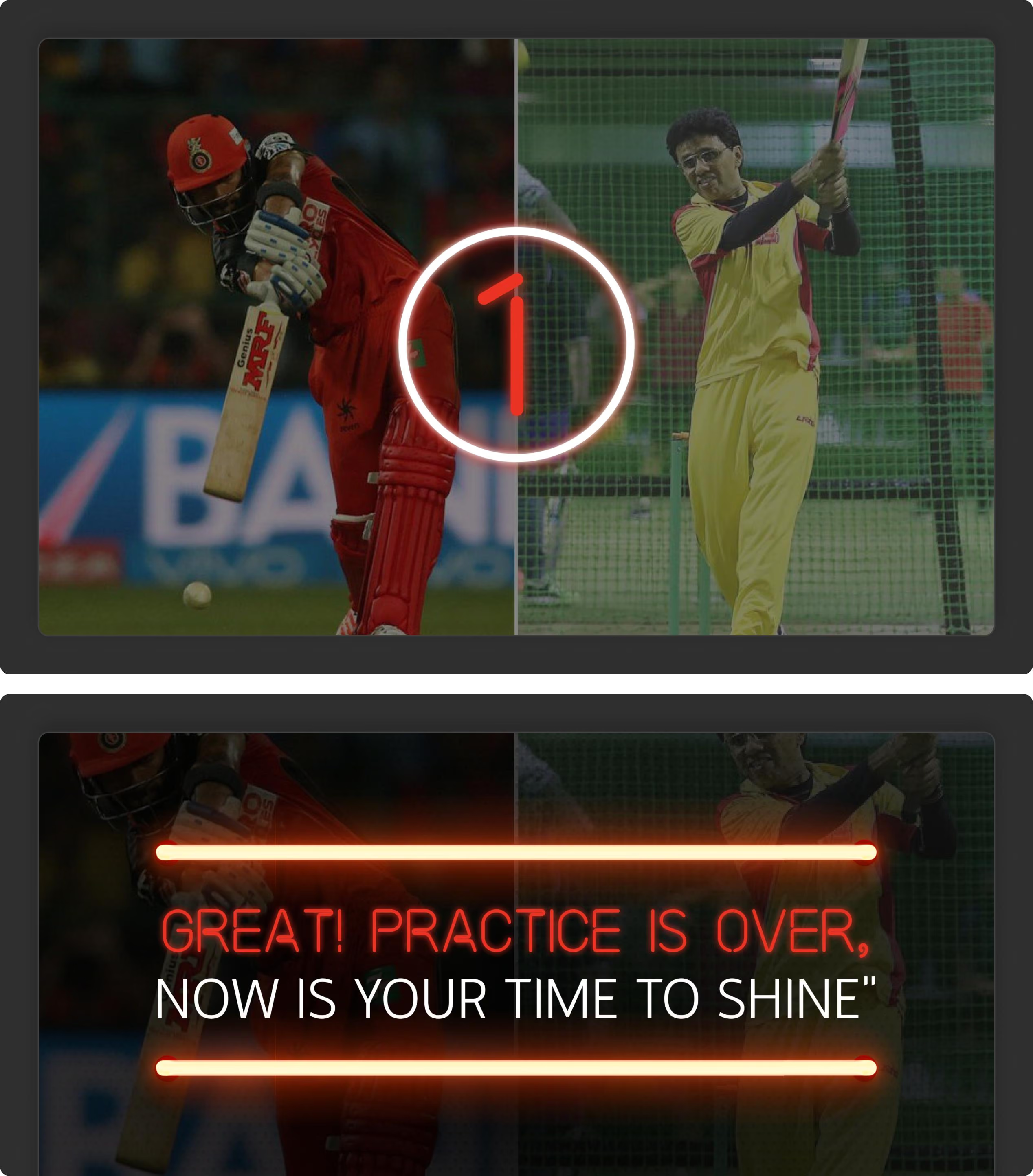
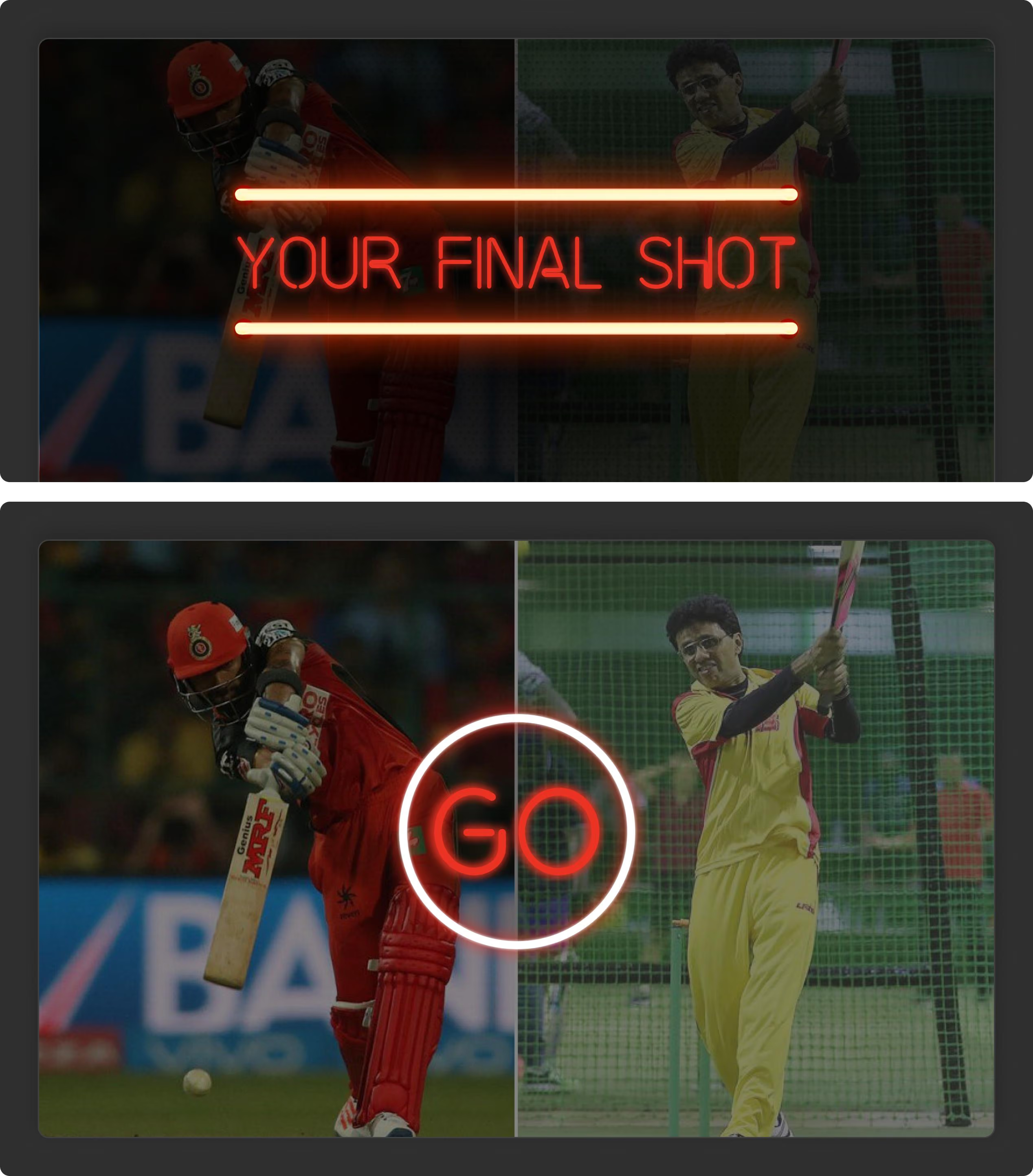
Structured prompts and countdown cues guide users from practice rounds to their final performance attempt.
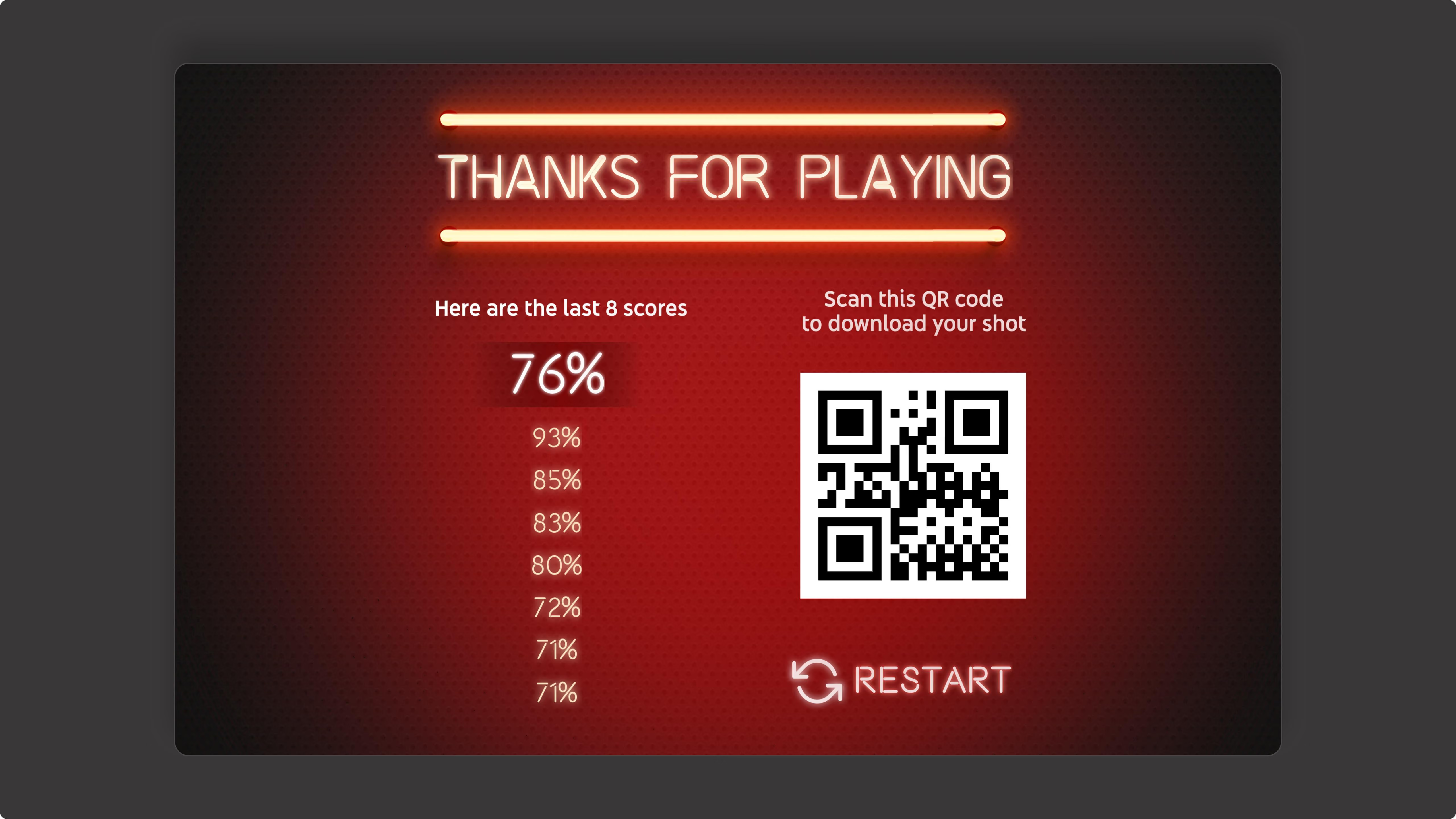
A final summary screen showcases past scores, enables QR-based performance downloads, and prompts users to restart for another attempt.


NetBramha designed and coded, from scratch, an AI-powered cricket batting experience for Google's YouTube Brandcast, debuting at the IPL (Indian Premier League) tournament - letting fans step up and bat like their favourite cricketers in a stadium-like AR setup.
This wasn't a UI redesign of an existing product; it was building a new physical-digital experience from zero, working with PoseNet motion-tracking technology for the first time to track a user's batting motion and translate it into real-time on-screen feedback.
Every part of the experience - motion tracking, sound design, visual feedback, and the underlying information architecture - had to stay perfectly synchronised in real time, since even a small lag between a user's swing and the on-screen response would break the illusion entirely.
That real-time-synchronisation discipline is closer to the technical demands of TVS's connected EV cluster app, where live telemetry has to render without lag, than to a typical web or mobile redesign elsewhere in NetBramha's portfolio.
The experience was built for IPL crowds who had at most two practice shots before their turn ended - there was no time for onboarding, tutorials, or a learning ramp. Every design decision had to make the interaction intuitive on first contact.
Designing for a true first-time user with zero patience for instructions is an extreme version of a constraint NetBramha handles across its Indian consumer fintech work too, most notably on BHIM, where many users were also completing their very first digital transaction with no prior reference point.
The Google cricket experience is NetBramha's most technically ambitious AI/motion-tracking project, but it isn't isolated - the studio's AI-product design work also spans Gyaan.ai's sales intelligence dashboards and Springer Nature Navigator's AI research platform. Those two are conventional screen-based AI interfaces; the Google project required designing for AI output expressed through physical movement and real-time motion feedback instead.
Google came to the project with predefined user flows already sketched out, which meant NetBramha's job included identifying the gaps and edge cases in an existing plan, not just building from an open brief.
That collaborative-refinement working style, building on a sophisticated client's existing thinking rather than starting from zero, is different from ground-up builds like GODai, where NetBramha owned the strategy from the very first decision.
Recommended Next