.avif)



.avif)



Unparalleled insights tailored to empower your business.
Robust strategies with the agility demanded by today’s digital landscape.
Creating experiences that resonate with users and drive results.
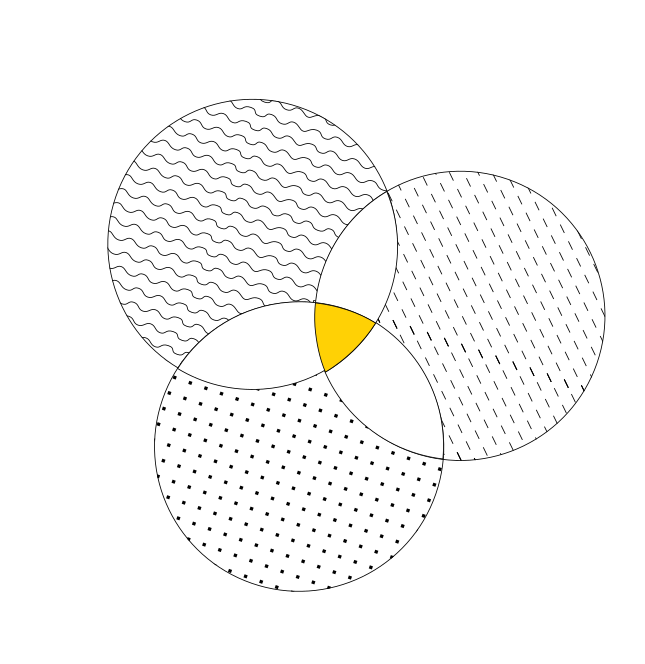
More than 80 of Bristol's active tech companies began life inside a university. The region receives more Innovate UK R&D grants than anywhere else in the country. The products coming out of Bristol's ecosystem are genuinely sophisticated. Graphcore. Ultraleap. Xmos. These are not feature factories. They are companies solving problems nobody else has solved.
The UX problem in Bristol is not that companies do not care about design. It is that research and engineering culture naturally prioritises what the product can do over how it feels to use it. By the time a Bristol product reaches paying enterprise customers, the interface is often the last thing that got attention and the first thing users complain about.
A cleantech dashboard that requires a consultant to interpret defeats the purpose of the platform. A biotech SaaS tool that takes three weeks of onboarding before a researcher can trust the output is not a product yet.
A B2B SaaS platform whose core workflow makes sense to the team that built it but confuses every new customer who tries it without guidance is a retention problem wearing a product shape.Bristol's enterprise buyers are sophisticated. They evaluate products on whether they work in practice, not whether the technology underneath is impressive. The technology underneath is always impressive in Bristol. The interface is where the deals are won and lost.
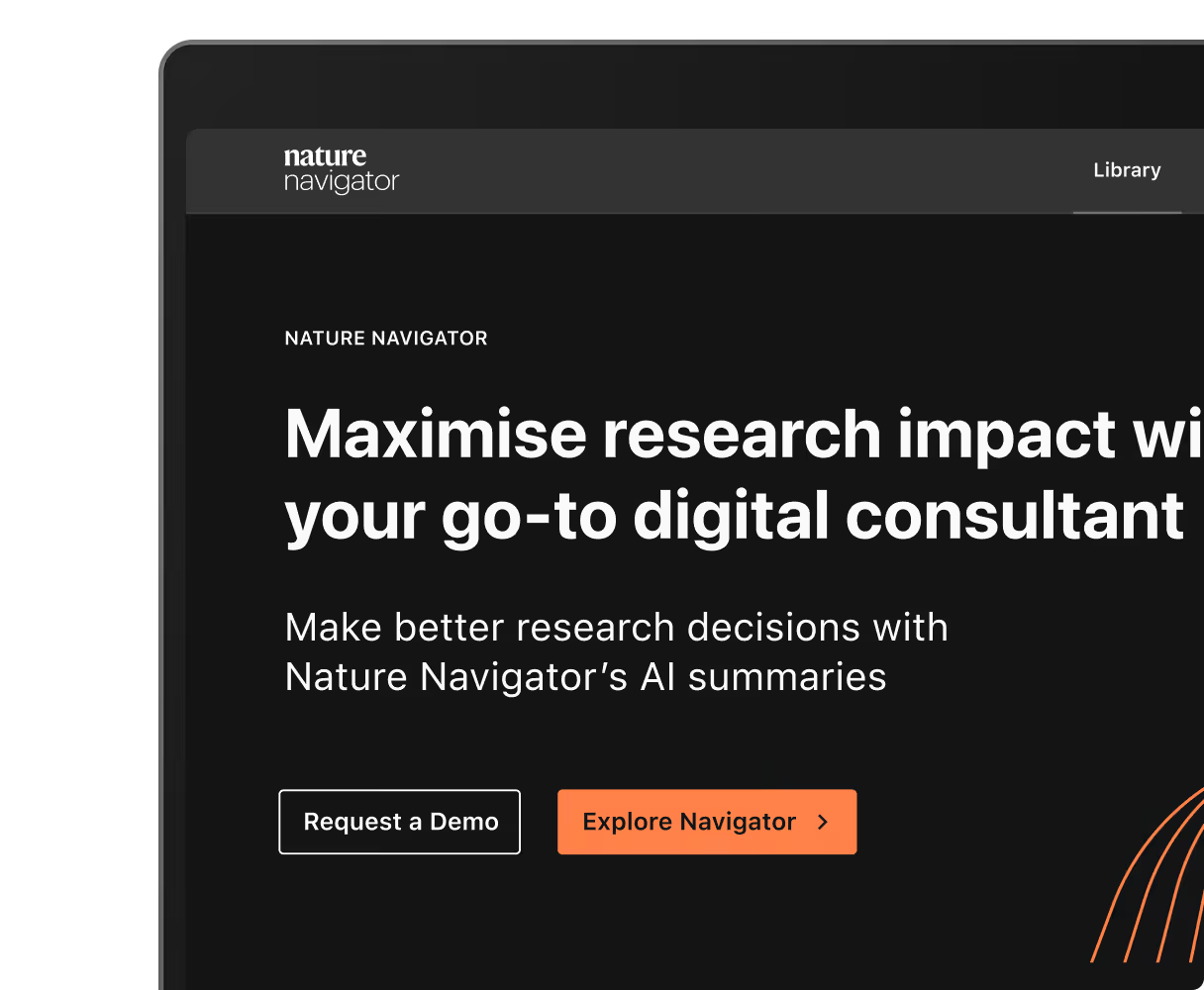
NetBramha designed the Nature Navigator platform for Springer Nature, an AI-powered research discovery tool that needed to make millions of scientific records navigable for researchers, funding bodies, and institutional decision-makers simultaneously. It won the Red Dot Design Award in 2024.
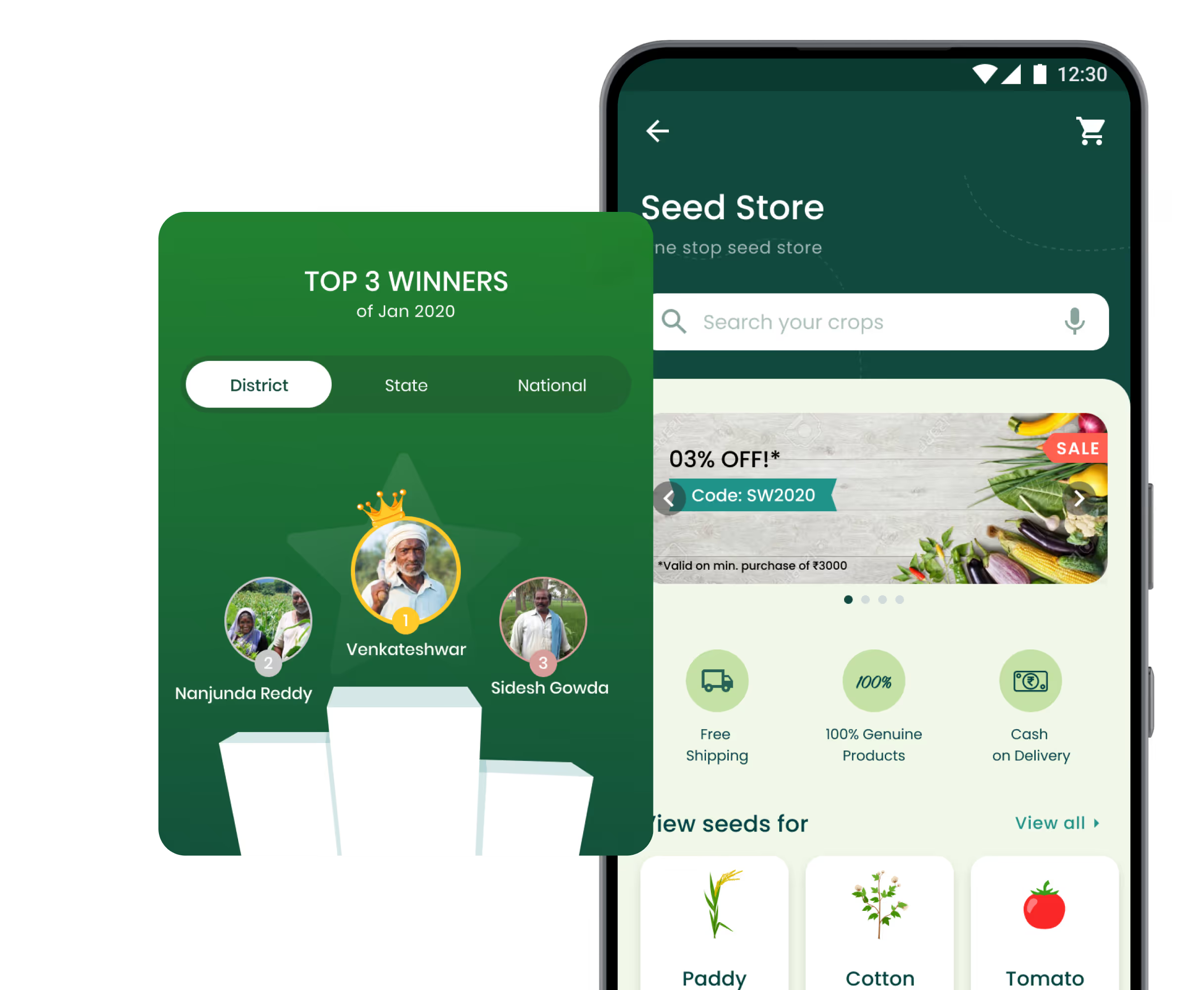
The SeedWorks project required 18 days of field research across 50 villages before designing a farming guidance app for users with minimal digital literacy. The challenge was not making the technology simpler. It was making the interface match the user, not the engineer.
Both projects are the Bristol problem in a different context. Technically deep product. Users who need it to feel immediately trustworthy and easy. NetBramha closes that gap.
Bristol launched 266 startups in 2025 and had nearly 2,000 digital job openings. The market is growing fast. The companies that will still be in it in five years are the ones whose products earn user trust in the first session, not the ones whose products require a champion inside the customer organisation to stay alive.
NetBramha works with Bristol teams remotely without friction. IST overlaps with UK morning hours. The first engagement is scoped around the specific flow that is costing you the most right now, not a full redesign that takes six months to feel like progress.
If your Bristol product is technically ahead of the market but losing users, trials, or renewals to products that are technically inferior but easier to use, that is a design problem with a design solution.
NetBramha will tell you in 30 minutes whether we can fix it and what that would look like.No deck. No pitch.
No proposal until we understand your product. Talk to NetBramha.

billion+ lives impacted with design so far
250+ Clients
25+ Countries
20+ Industries


They understand the user’s needs, research options out in the market, present different approaches, etc. I like how the designers feel passionately about my product & company. They’re not just trying to punch the clock.

Their attention to detail and willingness to do one extra iteration to get it right was impressive. Hard-working, no-nonsense bunch who were willing to roll their sleeves up. I genuinely believe they’re one of the best in the business.

Web traffic and conversions increased due to NetBramha Studios’ expertise. Their knowledge of UX/UI led to SEO improvements for the client. Their team’s innovative ideas set them apart from competitors.

NetBramha made sure the project is delivered to its best and had scope to upgrade as often as needed and even proposed ideas to enhance the Digital Footprint efficiency of Luminous through UX-UI uniformity and intersecting use cases.

A startup or for a Fortune 500 company, we follow a methodical & consistent approach to every design project we work on
Research – In-depth analysis of users through qualitative & quantitative analysis, ethnographic research, heuristic evaluation (through design audits), & usability testing, along with detailed competitor analysis.
Strategy – Powered by the insights derived in the research stage, we then work towards building a customer-centric product roadmap aimed at enhancing growth, product stickiness & market capture, through increased user engagement.
Design – Rugged information architecture, product mock-ups, user interface design, detailed motion & microinteractions, and finally customized illustrations & icons that set the apt succinct identity for your final product.
Since our inception 17+ years back our work has impacted more than a billion+ users worldwide. We take great pride in making a difference with design.
As an award-winning studio from India, our expertise involves everything that is needed to design (or redesign) a great user experience, including
– Website & Web app UX design
– Mobile UI/UX experience
– Enterprise UX design
– Branding & Illustrations
All of which is facilitated by rugged user research, product strategy, design thinking & deep craft for design.
We care for - People. (our team, clients & users)
Our people are our biggest strength. We care for our team & each one of them is hand-picked. Our culture is what drives us. Our care for our customers to see their problem as ours & empathy for the users is what makes us tick.
We care for - Design. (craft, outcomes, process)
We are absolutely passionate about design. We contribute to the design community, build our expertise & hone our skills every single day. We truly believe that design can change the world for better.
We care for - Outcomes (results, wins, learnings)
We are result driven & backed with experience. Our clients trust us to deliver results across experiences. Clients like Google, Microsoft, Cisco, Intel, Infosys, Emaar etc have mandated us to design new products, scale existing products or disrupt a new market with design.
Bristol has one of the strongest sustainability tech ecosystems in the UK, with a cluster of companies building products across renewable energy management, carbon tracking, and environmental monitoring.
UX design for sustainability tech requires making complex data accessible to non-specialist users, including utility managers, procurement teams, and corporate sustainability officers who need to make fast decisions from data-heavy dashboards. NetBramha's visual design and information architecture practices are well suited to this challenge.
Yes, and this is one of the most measurable cases for UX investment. Support ticket volume in telecom and mobile products is almost always a sign of UX failures: unclear billing interfaces, confusing plan comparison tools, and self-service flows that force users to call instead.
NetBramha's mobile and telecom design practice specifically addresses the self-service UX layer and has a track record of reducing support contact rates through better-designed customer account experiences.
Wireframing is the structural blueprint of a digital product: layout, navigation, and content hierarchy defined before any visual design is applied. For Bristol tech startups, wireframes serve two critical functions.
They allow the product and engineering teams to review and challenge the structure before it is built, and they provide a low-cost way to test navigation logic with real users before investing in visual design. NetBramha treats wireframing as a communication tool between design, product, and engineering rather than an internal design artefact.